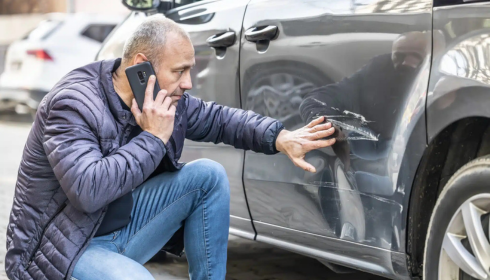
At first glance, an Uber accident may look like any other car crash on Indianapolis roads. Vehicles collide, injuries occur, and insurance information is exchanged. The complexity begins once injured passengers or drivers attempt to determine who is actually responsible for covering medical bills, lost income, and long-term care. Uber accident claims introduce layers of responsibility that do not exist in traditional car accidents.
Unlike standard crashes where liability usually rests with one driver’s insurance policy, Uber accidents involve app-based rules, corporate insurance policies, and timing disputes. Many injured individuals only realize how complicated the process is after speaking with an Indianapolis Uber accident lawyer who understands how rideshare claims differ from ordinary auto accidents.
Vaughn A. Wamsley regularly represents Indianapolis residents who expected a straightforward claim but instead faced delays, denials, and confusion caused by Uber’s unique insurance structure.
Uber’s business model creates legal complexity.
Uber’s rideshare model is the foundation of why claims are more complicated. Drivers are not employees, and that distinction shapes every part of the claims process.
• Uber classifies drivers as independent contractors rather than employees. This allows the company to limit direct responsibility for crashes, even when the driver was actively working. Injured passengers often assume Uber is automatically responsible, only to learn that liability depends on specific conditions.
• The company relies on insurance policies that activate only during certain phases of app usage. These policies are designed to protect Uber financially, not to simplify claims for injured people.
• Responsibility is divided among multiple parties, including the driver, Uber’s insurer, and sometimes third-party drivers involved in the crash.
App status determines which insurance applies.
One of the most confusing aspects of Uber accident claims is how app status controls insurance coverage. This single detail often determines whether meaningful compensation is available.
• If the Uber app was turned off, the driver’s personal auto insurance applies. Many personal policies exclude coverage when a vehicle is used for rideshare purposes, leading to denials.
• If the app was on but no ride was accepted, limited rideshare coverage applies. These limits are often insufficient for serious injuries involving hospitalization or long-term treatment.
• If a ride was accepted or a passenger was in the vehicle, higher coverage limits apply, but claims still require proof, investigation, and approval before payment occurs.
Why insurance companies dispute Uber claims
Insurance disputes are far more common in Uber accidents than in regular car crashes. Multiple insurers may be involved, each seeking to minimize its own liability.
• Personal auto insurers often deny claims by arguing the driver was engaged in commercial activity at the time of the crash.
• Uber’s insurer may question whether the app was active or whether the driver had officially accepted a ride.
• Third-party insurers may attempt to shift blame to the Uber driver, even when their own insured caused the crash.
These disputes frequently delay medical payments and force injured people to cover costs out of pocket while insurers argue.
Digital evidence creates additional hurdles.
Uber accident claims rely heavily on digital records rather than traditional paperwork. While this data can be helpful, it often becomes a point of contention.
• App timestamps are used to determine when coverage applies, and even minor discrepancies can lead to coverage disputes.
• Trip logs must align with police reports, witness statements, and medical timelines. Any inconsistency may be used to delay or deny a claim.
• Passengers typically do not control or have immediate access to this data, leaving them dependent on Uber and insurers to produce accurate records.
Medical treatment timelines complicate Uber claims.
Injuries from Uber accidents often follow delayed patterns, complicating insurance evaluations.
• Emergency room visits may document only initial symptoms, while more serious issues emerge days later.
• Follow-up care, such as imaging, therapy, or specialist visits, may be questioned if insurers believe treatment was unnecessary or unrelated.
• Gaps in treatment are often used to argue that injuries were minor or resolved quickly, even when symptoms later worsen.
Passenger injuries differ from driver injuries.
Uber accidents involve both passengers and drivers, each facing different challenges.
• Passengers may be injured by interior impacts, such as hitting door frames, seatbacks, or windows. These injuries can be severe but harder to document visually.
• Drivers may experience whiplash or repetitive strain injuries that develop over time, especially if they continue driving after the crash.
• Passengers often rely entirely on rideshare coverage, while drivers may face conflicts between personal and rideshare insurance.
Indianapolis traffic patterns increase claim complexity.
Local road conditions and traffic patterns in Indianapolis contribute to the frequency and severity of Uber accidents.
• Congested areas like downtown Indianapolis and Mass Ave create frequent stop-and-go traffic, increasing rear-end collision risks.
• Major roadways such as I-65, I-70, and I-465 see high-speed traffic where Uber drivers may be unfamiliar with merging patterns.
• Rideshare pickups near events, nightlife districts, and hotels often involve sudden stops or illegal parking, increasing crash risk.
How Marion County courts view Uber accident disputes
Marion County courts increasingly handle Uber accident claims as rideshare usage grows. These cases often focus on documentation and credibility.
• Courts examine app data, insurance policies, and driver status carefully to determine which coverage applies.
• Medical records play a central role in demonstrating injury progression and treatment necessity.
• Clear timelines linking the crash to injuries help counter insurer arguments about delayed symptoms.
Why Uber claims take longer to resolve
Uber accident claims often take longer than traditional car accident claims due to more complex investigations.
• Multiple insurers must review the same evidence, often reaching different conclusions.
• Requests for app data and corporate records slow the process.
• Injured individuals may receive conflicting instructions from different insurance adjusters.
Financial pressure on injured victims
Delays in Uber claims place financial pressure on injured people.
• Medical bills arrive before coverage is resolved.
• Time away from work leads to lost income.
• Out-of-pocket expenses accumulate while insurers debate responsibility.
This pressure often pushes injured individuals toward early, inadequate settlements.
Steps to protect yourself after an Uber accident
Taking proactive steps helps reduce complications later.
• Seek medical care immediately and follow treatment recommendations.
• Document all symptoms, even those that appear days after the crash.
• Save all Uber app communications and trip details.
• Avoid providing recorded statements without understanding coverage implications.
Why early guidance matters in complex Uber claims
Uber accident claims are not designed to be simple for injured people. Early guidance helps avoid common mistakes that insurers exploit.
Vaughn A. Wamsley works with injured Uber accident victims throughout Indianapolis to clarify insurance coverage, document injuries, and address long-term consequences. If your Uber accident claim has become complicated or delayed, speaking with an Indianapolis Uber accident lawyer can help protect your recovery, your rights, and your future.
Related Legal Articles

“Equal Pay for Equal Work” in Public Service: Judicial Approach to Pay Parity
Transfers of Government Employees: Administrative Discretion and Legal Challenges

Departmental Enquiries and Principles of Natural Justice in Public Employment